Exercise and multiple sclerosis are closely connected, not only when it comes to strength, endurance and mobility, but also through the effects physical activity can have on the immune system.
This article is an English adaptation of my original German interview with Prof. Dr. Dr. Philipp Zimmer, first published on 14 August 2023. You can find the original German interview here: Wie Sport die Multiple Sklerose beeinflussen kann – Originalinterview
In our conversation, Prof. Zimmer explains what exercise immunology can teach us about multiple sclerosis, why aerobic exercise is particularly interesting from an immunological perspective, what role strength and balance training play, and why people with MS can benefit from finding a form of exercise that genuinely fits their abilities and everyday life.
A small spoiler before we begin: regular physical activity is well worth integrating into everyday life. Depending on your individual situation, exercise that challenges you enough to raise your heart rate and make you sweat can contribute to fitness, symptom management and potentially beneficial adaptations of the immune system.
You are currently viewing a placeholder content from Default. To access the actual content, click the button below. Please note that doing so will share data with third-party providers.
More InformationTable of contents
Introduction to Prof. Dr. Dr. Philipp Zimmer
Would you briefly introduce yourself?
Prof. Dr. Dr. Philipp Zimmer, Head of Sports Medicine at TU Dortmund University: My name is Philipp Zimmer. At the time of this interview, I had been heading the Chair of Sports Medicine – Performance and Health at TU Dortmund University for about two and a half to three years.
What we do is investigate the influence of exercise on the immune system, particularly in clinical populations. Our focus includes people with MS and people with cancer.
I’m very pleased to be here for this interview.

What motivated you to choose this profession?
Prof. Dr. Dr. Philipp Zimmer: “Profession” is quite a broad term. I started out as a sports scientist and later also studied neuroscience. I completed doctorates in both fields, and fairly early on I knew that I wanted to go into research with a strong natural-science focus.
Initially, it was simply driven by curiosity. My contact with clinical populations – first mainly people with cancer and later people with MS – developed somewhat by chance. It was primarily connected to my original interest in immunology.
MS eventually became an important bridge between my different interests: the influence of exercise on the immune system, inflammatory processes, and my background in neuroscience.
Chance also played a role. I have a very valued colleague, who has since become a good friend, in Switzerland. He completed his doctorate in a rehabilitation clinic, and we have been collaborating for many years. He made it much easier for me to enter this field.
Exercise immunology – an overview
What does exercise immunology investigate?
Prof. Dr. Dr. Philipp Zimmer: Sports medicine is a very broad field. You can look at sports cardiology, for example, or orthopaedic problems associated with sport. That is not what we primarily do. Our work is more focused on molecular biology and on understanding the mechanisms triggered by exercise: What happens in the muscles? What happens in other organ systems?
What fascinates me most is the immune system and immunology. That alone is already an enormous field, just as the central nervous system is an extremely complex organ system.
There are many different questions you can investigate. For example, you can use immune-system markers to assess how heavily an athlete is being stressed. In elite sport, this can help with training-load management: Is someone overtraining? Do they need more recovery?
That interests me to some extent, but my main interest is something else. Apart from enjoying exercise myself, what I find most interesting is how we can use it to improve everyday life for people living with illnesses.
That brings us to sports medicine. The two disease areas I find particularly interesting are cancer and MS. The immune system plays a major role in both diseases, although in very different ways, including from a therapeutic perspective.
In cancer, for example, we ask whether we can activate or mobilise immune cells that recognise and kill tumour cells, or whether we can alter the tumour microenvironment.
With MS, our focus is more on whether there are particular immune cells that play a central role in the disease and whether we can influence those cells – hopefully in a beneficial direction.
How does exercise generally influence our immune system?
Prof. Dr. Dr. Philipp Zimmer: That is a huge question, and there is no simple answer. The immune system is extremely complex, and I am not a fan of viewing everything in terms of black and white – simply calling something “good” or “bad”. The immune system is far too diverse for that. Something that may be beneficial for one person or in one situation might not necessarily be beneficial in another.
For a basic understanding, it is important to distinguish between two things.
The first is acute exercise. That means I go out once and jog, walk, cycle or do strength training and then examine the immediate response.
The second major question – and what most people are probably thinking about – is: What happens when I exercise regularly?
When exercise is performed regularly, perhaps with the specific goal of improving performance, we call it training. The question is whether these repeated stimuli lead the immune system to adapt.
You can compare this with strength training. If I lift a weight 30 times, the immediate effect might be muscle soreness and fatigue. But if I do that regularly, the system adapts and the muscle grows. We call that hypertrophy.
Similar processes occur within the immune system. We see acute effects that may not always look positive in isolation, but when the stimulus is repeated regularly in a training context, the immune system can adapt and potentially become more resilient to stressors.
That is a useful basic concept before we go into the details.
Can you explain the role of natural killer cells and regulatory T cells in simple terms?
Prof. Dr. Dr. Philipp Zimmer: Natural killer cells are an immune-cell population that we have studied extensively. They are particularly interesting because they are highly sensitive to exercise.
There are very few immune-cell populations that respond as strongly to physical exertion. Natural killer cells are mobilised and activated particularly strongly by acute exercise.
Their role is especially relevant in the context of cancer and viral infections. In simplified terms, you could think of them as a kind of internal tumour police.
These cells patrol the body. They are part of the innate immune system and can recognise and kill abnormal cells, particularly virus-infected cells and tumour cells. There are not many cells in the body capable of doing that.
If exercise allows us to mobilise and activate these cells, that is very interesting. It is one of several mechanisms that we believe may contribute to the beneficial effects associated with exercise in certain types of cancer.
The second cell population you mentioned, regulatory T cells, is particularly relevant to MS. They are classically anti-inflammatory cells and have an immunosuppressive function.
You can imagine them as a brake on the immune system. When the body has a strong inflammatory response, it is important that the immune system can eventually slow that response down again.
The word “immunosuppressive” can sound negative, but in MS this regulatory function is very important because we need cells that can restrain excessive immune activity and counter inflammation.
We know, including from experimental models, that regulatory T-cell function can be altered in MS. What is particularly interesting for us is that exercise may influence these regulatory mechanisms.
Regular exercise appears to have anti-inflammatory effects. A single acute exercise session can initially trigger inflammatory signals, but repeated exercise stimuli can promote adaptations that increase the body’s anti-inflammatory capacity.
Effects of exercise on multiple sclerosis
Which MS symptoms can be positively influenced by exercise?
Prof. Dr. Dr. Philipp Zimmer: That is a very good question, and this is where we get to what is clinically relevant. For many people living with MS, hearing that we have shifted a particular immune cell in one direction or another may initially be less interesting.
But I still think understanding these mechanisms matters. If people know that something measurable is actually happening in the body, they may be more willing to take exercise seriously as part of their treatment and self-management.
Exercise is certainly not a miracle cure, and it cannot address every symptom. But there are a number of areas where evidence shows that exercise or, more precisely, targeted training interventions can help.
The most obvious area is motor and sensorimotor function.
We can improve strength and endurance through training. These abilities are reduced in many people with MS. If I want to continue climbing a flight of stairs, for example, strength and endurance can be highly relevant.
For me as a sports scientist, saying that strength training can increase strength or endurance training can improve endurance sounds almost trivial. But for the person concerned, that improvement can have an enormous impact on everyday life.
Then there is fatigue management. There is good evidence that exercise can help with fatigue. Targeted training – rather than simply moving around a little – can be particularly valuable.
At the time of our conversation, research also suggested that balance training might have a useful role in addressing MS-related fatigue. Aerobic and resistance training remain important as well, but balance exercises may add another useful component.
When it comes to cognitive impairment, the picture is more complicated. You often hear that exercise is good for the central nervous system and cognitive performance. At the time of this interview, however, the evidence specifically in MS was still relatively limited and heterogeneous.
Some studies had found no statistically significant effects, while others reported positive findings. Study designs and quality varied considerably, so I would not have wanted to make an unequivocal statement.
We did know that exercise did not appear to be harmful to cognition, and there was evidence that training can positively influence certain brain structures, but better studies were needed.
Those are probably the most important points: motor function, including strength, endurance and balance; fatigue management; and potentially cognition.
Nele: That distinction about study quality is important. Saying that studies have not yet been good enough to provide a clear answer does not mean that better-designed studies could not eventually reveal a positive effect.
Prof. Dr. Dr. Philipp Zimmer: Exactly. And there is one thing I did not mention: psychosocial factors.
We know that exercise can be very helpful for depressive symptoms and low mood. There are also many studies showing that exercise can improve quality of life.
Sometimes the explanation can be very practical. If I can climb the stairs more easily, walk farther or feel less tired, it is not surprising that my quality of life improves.
Can people benefit from an individually tailored exercise programme at every stage of MS, regardless of whether inflammatory disease activity or gradual progression is dominant?
Prof. Dr. Dr. Philipp Zimmer: In principle, yes. People across a very broad spectrum of MS can benefit.
Of course, we have to look at the individual situation. There are people who are extremely unwell or no longer mobile at all, perhaps even bedridden, and then conventional exercise becomes difficult.
But using a wheelchair and being physically active do not exclude each other. That is very important to emphasise.
I repeatedly meet people who use a wheelchair or have to spend much of their time seated and nevertheless begin moving more and may even regain a certain amount of mobility.
Exercise is not a cure-all. But I remember one woman from our MS exercise consultation who initially used a wheelchair and began climbing. She later returned to extensive climbing and was able to play table tennis while standing again. Experiences like that are impressive.
So a very wide range of people with MS can benefit from exercise and training. What they do, however, needs to be considered individually. That is crucial.
How important is aerobic exercise and what effects can it have in MS?
Prof. Dr. Dr. Philipp Zimmer: Aerobic exercise is one of our main areas of interest because, from an immunological perspective, a lot happens during endurance exercise.
Strength and endurance training overlap considerably at a molecular level, but they also produce different adaptations. When you are particularly interested in the immune system, endurance training provides a very potent stimulus.
That is why it has become a major focus of our research. But that does not mean that strength training is any less important.
Perhaps I can put it this way: endurance exercise might produce a stronger immunological effect in some respects, but endurance alone may not help me sufficiently when I want to climb a flight of stairs. For that, I need strength as well as endurance.
So I do not want to play one type of training off against another.
The World Health Organization recommendations also include different components of physical activity.
From our research perspective, aerobic exercise is particularly interesting because of what happens immunologically and because we believe these mechanisms may potentially be relevant to disease modification.
But even “aerobic exercise” is a broad term. One of the questions we are interested in is whether continuous moderate exercise or shorter, more intensive exercise sessions provide the optimal stimulus.
Exercise dosage is surprisingly complex. With a medication, you may have a clearly defined dose based on body weight or body surface area. With exercise, you have to ask: How often? How intense? What kind of exercise? Strength or endurance? For how long?
So finding the right “dose” becomes much more complicated.
Nele: I can relate to that. I used to take my daughter to daycare by bicycle. It was only about two kilometres each way, but there was a small hill and she weighed around 15 kilograms sitting on the back of the bike. Then I would cycle back without her. That added up over the day, even though it came in shorter sections. When I visited my parents, I sometimes cycled around ten kilometres each way, which obviously created a somewhat different training stimulus.
Prof. Dr. Dr. Philipp Zimmer: Duration naturally plays an important role. How long am I exercising?
The intensity and duration of the stimulus can influence how long some of the physiological effects last. That is exactly what we want to understand better: how can we optimise the training stimulus?
Why should people with MS include strength training as well?
Prof. Dr. Dr. Philipp Zimmer: One reason is strength itself – remaining capable in everyday life and perhaps being able to do more.
But muscle is also an extremely important organ system. We know that muscles can release a whole range of factors that can influence the immune system and potentially the central nervous system.
In sports and molecular medicine, we talk about inter-organ crosstalk – communication between different organs and tissues through signalling molecules.
That is another reason why I would never push strength training aside. There are many substances released by the muscle that are highly relevant to health, even though strength training is not the primary focus of our own research.
Are there recommendations for how often and what types of exercise people with MS should do each week?
Prof. Dr. Dr. Philipp Zimmer: This question always comes up, and rightly so.
One way of answering it is to look at the global physical-activity recommendations from the World Health Organization.
They essentially include the components we have already mentioned: endurance, strength and balance.
For adults, aerobic exercise and strength training are recommended. Strength training should involve the major muscle groups on at least two days per week.
And by strength training I do not mean simply moving a resistance band around without substantially challenging the muscle. The aim is to maintain or build muscular capacity, so the muscle needs to be meaningfully challenged.
Whether someone reaches muscular fatigue after six squats with a heavy weight or after 20 or 30 squats using their body weight depends on the individual. The important point is that the muscle receives an appropriate training stimulus.
For aerobic activity, the WHO recommends approximately 150 to 300 minutes of moderate-intensity activity per week, or a smaller amount of vigorous-intensity exercise.
That activity does not necessarily need to take place in a gym. Cycling to work, for example, can contribute.
The relationship is essentially a dose-response relationship: you can exercise for longer at a lower intensity or for less time at a higher intensity.
Our studies at the time suggested that short, intensive sessions could be particularly interesting. They can be easier to fit into everyday life and may produce stronger acute immunological responses, which might also make them efficient in terms of adaptation.
The third component is balance training. The WHO particularly emphasises balance work for older adults, but for people with MS I would consider introducing it earlier.
We have already discussed the possible benefits regarding fatigue. And when someone has sensorimotor problems, it makes sense to stimulate and maintain these systems.
Balance training is also very easy to integrate into everyday life. You do not necessarily need half an hour. You can practise while brushing your teeth, for example, by standing on one leg – depending, of course, on your individual balance and fall risk.
These are general recommendations, and then we have to adapt them to the specific person and their particular problems.
People also frequently ask me: “But I like tennis,” “I play football,” or “I love dancing. What about those?”
Those are fantastic forms of physical activity and I would encourage people to continue them when they are safe and appropriate for them.
I once met a younger person with MS who had been told to stop playing football. He said, “Absolutely not.” And football is actually an excellent sport: it involves agility, changes of direction, endurance and strength.
If somebody is regularly playing a sport like that, they do not necessarily have to add a completely separate programme just because endurance training happens to be easier to study scientifically.
Many recommendations focus on endurance and strength because they are relatively easy to standardise in the laboratory. I can put someone on a stationary bike or treadmill, monitor their heart rate and control the workload very precisely.
That is much harder with football or tennis. But that does not mean those sports cannot be valuable. The same applies to dancing and yoga.
Nele: And sports that involve other people can have an additional benefit for mental health because you are exercising together and staying socially connected.
Prof. Dr. Dr. Philipp Zimmer: Exactly. That is another benefit.
Are the positive effects on the immune system proportional to intensity – is more always better? And can you exercise too much?
Prof. Dr. Dr. Philipp Zimmer: This question comes up frequently as well, and it is not that easy to answer.
First, we need to distinguish general physical activity from structured sport or exercise. Physical activity also includes cycling to work or to the shops, gardening and many other everyday activities.
For general physical activity, it appears that doing more is generally beneficial, although there will eventually be diminishing returns.
When we specifically talk about endurance training, however, the appropriate amount depends very strongly on the individual.
A competitive athlete training for a triathlon can tolerate a completely different workload and requires a much stronger training stimulus to continue adapting than someone who has previously done very little exercise.
That makes precise recommendations difficult.
Recovery is also important. I know this particularly from the cancer setting: people hear that exercise may have major health benefits and suddenly go from zero to an extremely ambitious programme.
You have to be careful because the body adapts during periods of recovery.
If you repeatedly interrupt that recovery with another major training stimulus, you can eventually reach a state of overtraining.
People may then lose their motivation to move, feel persistently tired, unmotivated or low. From an immunological perspective, excessive training loads without adequate recovery may also be associated with unfavourable inflammatory responses.
An acute training stimulus generates signals that the body subsequently adapts to. If you never allow enough time for that adaptation and simply add one intense stimulus after another, that is not beneficial.
Nele: I once lived in the United States for a year and a half and used to go to the gym about six times a week. But I divided my strength training very deliberately. I swam twice a week and trained chest and back, legs and glutes, and arms and shoulders on different days so that each muscle group had time to recover. Does that approach work?
Prof. Dr. Dr. Philipp Zimmer: Yes, absolutely. Although that is a very ambitious programme.
Nele: That was when I was younger.
Prof. Dr. Dr. Philipp Zimmer: If somebody who is only just beginning to exercise hears that, six sessions per week may sound extremely ambitious.
But if you want to train at that level, splitting strength sessions by muscle group can make sense.
Most people do not need to do that simply to stay healthy. Two whole-body strength-training sessions per week can be sufficient to target the large muscle groups.
A split programme becomes more relevant when somebody has more ambitious strength or physique goals.
What do you recommend to people with MS who have done very little exercise so far?
Prof. Dr. Dr. Philipp Zimmer: First of all, it is important to recognise that movement and exercise are an important, evidence-based component of managing health with MS.
Many studies show benefits.
Once you understand that, the next question is naturally: If I have not previously been physically active or trained regularly, what should I do?
My number-one recommendation is to find something you actually enjoy. I think that is essential.
We see this in rehabilitation settings. You can run a fantastic interval-training programme with somebody for three or four weeks during rehabilitation. But then they go home, everyday life returns, and the programme disappears again.
So you need to find a form of activity you enjoy. At the beginning, what it is matters less than whether it helps you get started and continue regularly.
At some point, you may notice that you feel better and the activity begins to reinforce itself.
Getting to the point where a behaviour becomes automatic takes time. Research in psychology shows considerable variation in how many repetitions are needed to establish a habit. The important message is that you should not expect exercise to feel completely automatic after the third session.
Many people join a gym at the beginning of the year, go five times and then stop.
That is why I sometimes recommend documenting what you do. You could use an app, but even a simple tally works. It allows you to see: How often have I actually done this?
It is also important to make starting easy.
Set a realistic goal rather than immediately deciding that you want to run a marathon. Perhaps begin by trying to walk or jog continuously for five minutes.
And make exercise convenient in everyday life. If you want to exercise in the morning, put your clothes out the evening before.
These may sound like simple things, but I know starting is difficult for many people.
The social component should not be underestimated either.
Doing something together with another person can help. Working with a qualified personal trainer or exercise professional can also be useful at the beginning because they can provide guidance and reduce some of those initial barriers.
What can help people stick with their planned exercise programme instead of giving up after a short time?
Prof. Dr. Dr. Philipp Zimmer: I probably cannot add much to what I have just said.
One useful thing to remember is that the body has a biological memory. People who exercised regularly earlier in life can often regain fitness more quickly when they return to training.
When it comes to motivation, the same principles apply: make it manageable, find something you enjoy, document your progress if that helps, and give yourself enough repetitions for the activity to become part of your routine.
Where can people with MS find exercise ideas and training recommendations adapted to different levels of physical ability and disability?
Prof. Dr. Dr. Philipp Zimmer: At the time of this interview, that was still a problem in Germany.
If you look at what happens in rehabilitation clinics and in everyday practice, approaches can vary considerably. Every sports scientist or physiotherapist may have their own preferred concept. That does not necessarily mean those concepts are bad, but not all of them are equally evidence-based.
Different rehabilitation clinics can train people in very different ways, even though there is already a useful body of research.
What we ultimately need is more high-quality evidence translated into guidelines. That is an important step.
It also matters for healthcare funding. Strong evidence can help encourage healthcare systems and insurers to support interventions beyond conventional physiotherapy where appropriate.
I would like to see evidence-based, targeted training with appropriately qualified professionals become more established.
In Germany, organisations such as the German Multiple Sclerosis Society, the DMSG, provide useful services, but general recommendations can still be difficult to personalise.
That is one reason we offer our MS exercise consultation.
The idea of the online consultation is not that people jump around in front of their computer while we run a workout. It is about looking at the individual person.
What problems do you have? What experience do you already have? What are you currently able to do?
Based on that information, we can make an individual recommendation for movement or training.
Editor’s note for the international MS community: Prof. Zimmer is describing the German healthcare and rehabilitation system here. The underlying point applies much more widely: access to personalised, evidence-based exercise advice varies considerably between countries and healthcare systems.
For internationally accessible English-language guidance, the MS International Federation (MSIF) provides resources on exercise and physical activity, including programmes suitable for different abilities.
The European Multiple Sclerosis Platform’s “Keep moving with MS” programme includes strength, endurance, balance and stability sessions that can be adapted to different levels of mobility.
Another practical English-language resource with exercises for different levels of mobility is available from the MS Society UK.
Quickfire Q&A
Complete the sentence: “For me, multiple sclerosis is…”
Prof. Dr. Dr. Philipp Zimmer: …a very fascinating disease, and I hope that we can continue generating much more evidence that helps make the disease as manageable as possible for the people living with it.
And perhaps one day we will reach a point where we can say that we can reliably counteract progression to a much greater extent.
What breakthrough in MS research and treatment would you most like to see in the next five years?
Prof. Dr. Dr. Philipp Zimmer: I saw this question in advance, and I have to say that I would rather not choose something related to exercise.
I would like us to find a medical therapy – perhaps even something like a vaccine – that can significantly reduce the future development of this disease.
Of course, that would not immediately help the people already living with MS today, but from a prevention perspective I think it could be enormously important.
And naturally I also hope that we continue developing treatment approaches for people already living with MS and ultimately reach a point where the disease can be cured.
Nele: I understand your answer. I previously interviewed Dr. Henri-Jacques Delecluse about Epstein-Barr virus and its role in cancer.
Many of us also have children. I think we would all be very happy if the next generation faced a substantially lower risk of developing MS and if there were something we could do preventively.
For English-speaking readers who want to explore the relationship between Epstein-Barr virus and MS further, you may also be interested in my English interview with Prof. Dr. Christian Münz. EBV insights: Shedding light on its impact on MS with Prof. Christian Münz
Prof. Dr. Dr. Philipp Zimmer: Exactly. From an immunological perspective, I believe there is a great deal of potential, particularly when it comes to vaccines.
I do not want to make overly bold predictions, but I think there is still a great deal of room for research.
Exercise is different. There are many aspects we can continue to investigate, and physical activity will remain an integral part of healthy ageing, irrespective of disease.
But if we are talking about a true breakthrough in preventing or curing MS, I believe pharmacological approaches will also be essential.
Farewell
Is there anything else you would like listeners and readers to take away from this interview?
Prof. Dr. Dr. Philipp Zimmer: I hope I have been able to explain some of these ideas and encourage people – with or without MS – to move more.
Physical activity is extremely important, and I believe it can help people positively influence their own health and, in the context of MS, aspects of living with their disease.
It also helps move people away from a purely passive role.
When you live with MS, you experience MRI scans, medications, medication doses, perhaps changes in treatment and many other things that are largely determined by the disease and medical care.
Exercise and training have one major advantage: they are something you can actively contribute yourself.
And you can contribute quite substantially.
That sense of being able to do something yourself is probably one of the messages that matters most to me, and I hope I have encouraged people to become more active.
Where can people find you and your scientific work online?
Prof. Dr. Dr. Philipp Zimmer: We have an MS exercise consultation that is supported by the DMSG in North Rhine-Westphalia. It is an online service and provides personalised, evidence-based advice on exercise and physical activity for people with MS.
Our scientific work can primarily be found through the usual academic platforms and scientific journals.
You can also find our work through PubMed or Google Scholar by searching for my name together with “multiple sclerosis” or “exercise”.
Editor’s note: The DMSG exercise consultation remains a German-language service and is therefore mainly relevant to people who can use German. For international readers, Prof. Zimmer’s English-language TU Dortmund University profile is the more useful link for his research background and current work. Prof. Dr. Dr. Philipp Zimmer at TU Dortmund University
For direct access to peer-reviewed research, PubMed is also preferable for an international audience. One useful starting point is Prof. Zimmer and colleagues’ systematic review on physical activity, exercise and MS disease activity and progression. Fitness, physical activity, and exercise in multiple sclerosis – PubMed
Nele: Thank you very much, Professor Zimmer. Thank you for explaining the science in such an accessible way, for showing us why exercise matters and for encouraging us to incorporate more movement into everyday life.
I wish you every success with your future research.
Prof. Dr. Dr. Philipp Zimmer: Thank you very much for the invitation. Goodbye.
Further reading on MS-Perspektive International
If you would like to explore exercise and physical activity in MS further, these English articles complement Prof. Zimmer’s interview:
How exercise boosts your immune system: What people with MS should know with David Walzik – a more recent interview from Prof. Zimmer’s research group looking specifically at exercise immunology and immune-cell responses. Read the interview with David Walzik
Multiple sclerosis and pain: How exercise and physical activity can help – with Rasmus Christian Jungersen from Aarhus University, exploring chronic pain, movement and exercise in MS. Read the interview on exercise and MS pain
Movement limitations in MS – how to maintain strength, balance and mobility – practical background on maintaining physical function when MS affects mobility. Read about movement limitations and MS
Until next time – make the most of your life, and ideally include some regular movement along the way. 😉
Nele
For more information and positive thoughts, subscribe to my newsletter for free.
Click here for an overview of all podcast episodes published so far.
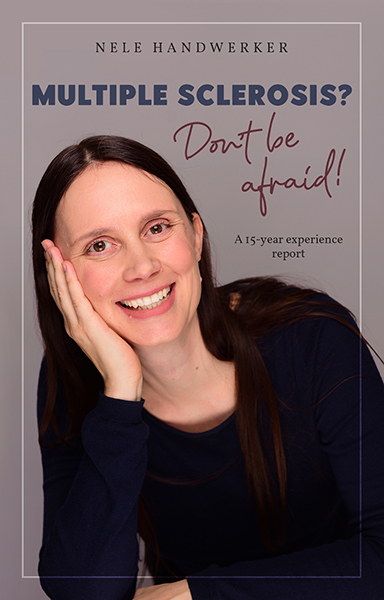
And at many more places.
* This text contains affiliate links. This means that I get a small compensation if you buy the product recommended by me through the link. For you nothing changes in the price of the product. And it helps me to pay for the blog and to write new posts.