Aging in multiple sclerosis can change how symptoms develop, how treatment benefits and risks are weighed, and what support helps you stay independent. Fewer relapses do not necessarily mean that nothing is happening. And reaching a particular birthday does not automatically mean that you should stop treatment.
In this episode, I speak with Dr. Yi Chao Foong, an MS neurologist in Hobart, Tasmania, and an MS Australia postdoctoral fellow at the University of Tasmania. We discuss late-onset MS, progression independent of relapse activity, and why treatment decisions need to reflect the person sitting in front of the clinician. We also explore practical support for brain health, mobility and social participation, and the research that could make future decisions more personal.
If you are growing older with MS, or supporting someone who is, I hope this conversation helps you feel better informed and more confident about discussing your next steps with your healthcare team.
You are currently viewing a placeholder content from Default. To access the actual content, click the button below. Please note that doing so will share data with third-party providers.
More InformationTable of Contents
Opening: Introduction and context
Fong, could you briefly introduce yourself and tell us how your clinical and research work connects with aging and treatment decisions in MS?
Dr. Yi Chao Foong, MS neurologist and researcher: I’m Dr. Yi Chao Foong, or Fong for short, one of the MS neurologists at the Royal Hobart Hospital in Hobart, Tasmania, Australia. I’m also an MS Australia postdoctoral fellow at the Menzies Institute for Medical Research, University of Tasmania, and part of the MS research flagship there.
The way I got involved with aging and MS is that a lot of people with MS now, particularly in Australia, are over the age of 50. I’m always cautious when I talk about aging and MS: there is no clear-cut age cutoff. But in the literature, the generally accepted age threshold is 50.
I got interested because a lot of the people with MS I look after are over 50. When I first started clinic, there was very little evidence in this group. These endless questions came up: what should we do here? What is the best way forward? I was very lucky to have excellent mentors in Anneke van der Walt, Helmut Butzkueven and Bruce Taylor, who have a lot to do with the MSBase registry. That is how we got started looking at some of the key clinical questions in older people with MS using MSBase.

When we say “aging in MS”, what are we really talking about — biological aging, disease duration, disability, or all of these together?
Dr. Yi Chao Foong: There is just so much of it, isn’t there? There has been a real explosion in the literature around aging and MS. We used to focus on something quite limited, like relapse activity, MRI activity or disability progression. That has expanded into a whole variety of things, and I think that is great.
When we talk about somebody with MS, it is such a multifaceted thing. Particularly in older people, we are not just talking about MS. We are talking about everything else: comorbidities, meaning other illnesses, and how well they tolerate disease-modifying treatment, for example. Really, we are talking about all those things. We just have to be more specific in breaking down exactly what we mean by aging and MS.
Why is aging becoming such an important topic in MS now, both for people already living with MS and for those diagnosed later in life?
Dr. Yi Chao Foong: Traditionally, there has been so little evidence to guide us in what to do in this group. When we talk about older people with MS, there are two main clinical scenarios.
One is somebody with adult-onset, or even pediatric-onset, MS who was diagnosed well before 50 and is now getting older. We have to make a decision about a treatment they have often been taking for many years. Sometimes a specific event triggers that decision, such as an infection or cancer.
The other scenario is somebody diagnosed a little later in life: what we call late-onset MS, defined here as MS beginning after age 50. We need to know what to do in that situation as well.
Understanding: What changes with age in MS?
What tends to change in the immune system as people with MS get older?
Dr. Yi Chao Foong: This is clearly a huge topic. In its simplest sense, as people with MS get older, we start to shift towards immunosenescence: a complex medical term for changes in the immune system as it ages, including becoming less active in some ways.
In MS, we see fewer clinically evident relapses. Older people are less likely to have MS attacks, new lesions on MRI or contrast-enhancing lesions, which are lesions showing recent inflammatory activity.
MS is often described as shifting from relapses and visible inflammation toward more gradual progression. How would you explain that shift in everyday language?
Dr. Yi Chao Foong: What we tend to see more often is gradual progression, or progression independent of relapse activity. It is a gradual, slow, grumbling worsening of neurological function, even though the MRI does not show new lesions and the person is not having clinically evident MS attacks.
What is PIRA — progression independent of relapse activity — and why can it be so frustrating or confusing for people who are not having obvious relapses?
Dr. Yi Chao Foong: I hope we as clinicians are better at talking about it now. Traditionally, during annual or six-monthly reviews, we might say: “You haven’t had any attacks and your MRI is stable.” For the person with MS, that can feel like: “You’re not taking me seriously, because I’m telling you I’m getting worse every year. I can feel it.”
Maybe last year they could walk 500 meters and now they struggle to reach 400. Maybe last year they did not need a stick all the time, and now they are much more reliant on it. Even when there are no new MRI lesions and no clinically evident MS attacks, unfortunately, even with very good modern treatment, people can still progress gradually independent of relapse activity. I hope we are better at recognizing that and talking about it now.
In late-onset MS, where symptoms begin after age 50, what makes diagnosis and treatment decisions especially challenging?
Dr. Yi Chao Foong: I’ll start with diagnosis. This is recognized internationally. For example, there has been a recommendation to look for at least three periventricular lesions in people over 50. These are lesions next to the fluid-filled spaces deep in the brain. That is a recommendation rather than an absolute requirement.
The reason is that as people get older, they are more likely to have incidental lesions on brain MRI. Other conditions can look like MS on MRI but actually represent something else. Stroke, for example, is a common mimic in this older age group.
Treatment decisions are challenging because there is a lack of evidence specifically for this age group. There are also more comorbidities. Somebody may have had cancer or be at risk of cancer, and that affects how you think about treatment. Finally, late-onset MS tends to present with a more progressive form. Not always — these decisions need to be individualized — but that is a tendency, and current treatments are less effective against progressive aspects of MS.
Editorial clarification: Diagnosing MS after age 50 requires assessment of the complete clinical picture and exclusion of other causes. The updated diagnostic framework recommends additional supporting evidence in older people; the lesion count discussed here is not a stand-alone diagnostic rule. See the 2024 McDonald criteria and their clinical application.
Deep dive: Stability, relapses and treatment decisions
Many people hear that relapse activity becomes less common with age. Does that mean MS becomes less active — or just active in a different way?
Dr. Yi Chao Foong: Older people with MS are less likely to have attacks or new MRI lesions. But what we do tend to see more often is gradual progression independent of relapse activity. Even when the MRI is stable and there are no clinically evident attacks, people can still gradually progress, even with good modern treatment.
Your research suggests that moderate- to high-efficacy therapies can still reduce relapse risk in late-onset MS and in people over 60. What is the key message for patients?
Dr. Yi Chao Foong: The key message is that there is no one-size-fits-all in this age group. Our studies showed that even above 50, and even above 60, higher-efficacy therapy can effectively reduce relapses. The major caveat is that the relapse rate in this age group is actually very low.
Even when the relative reduction is quite good, the absolute reduction can be very small. That is a nuanced result. Just because something works does not mean you should use it in everybody. We need to take the individual in front of us into account.
For example, somebody aged 60 who has just been diagnosed, already has a very progressive form of MS and has other comorbidities is not necessarily somebody for whom I would advocate high-efficacy therapy. But somebody aged 55 with excellent function may have many years of life ahead. We often see people with MS aged 70 and above living very independent, rich lives.
So if somebody is 55, has a low level of disability, few comorbidities, but a highly relapsing onset or an MRI showing many contrast-enhancing lesions, I would absolutely offer high-efficacy DMT, meaning disease-modifying therapy.
Read the studies on late-onset MS and treatment in people over 60.
For someone who has been clinically and radiologically stable for years, why can stopping disease-modifying therapy still carry risks?
Dr. Yi Chao Foong: This is something where I have changed my practice a little. We used to see people who had been stable for many years on treatment, reached perhaps 60 or 65, and were taking something like interferon beta. We might say: “You’ve been stable for 20 or 30 years. Stopping should be fine.”
Then we had two major discontinuation trials: DISCOMS and DOT-MS. Essentially, they showed that even after several years of clinical and MRI stability, some people had reactivation of MS activity after stopping treatment. Many were taking platform therapies, such as interferon beta or glatiramer acetate. DOT-MS actually had to stop early because of disease reactivation.
That does not mean you can never stop therapy. Of course you can, and I still do that in selected situations. But stopping disease-modifying therapy carries a risk, even with platform therapies.
For people taking an S1P receptor modulator such as fingolimod, or taking natalizumab, there is also a risk of rebound activity. Studies have shown that even above age 50, that risk remains. We need to be very careful about stopping and think about bridging therapy, meaning another treatment to cover the transition where appropriate.
There is also emerging evidence about stopping anti-CD20 therapies, such as ocrelizumab or rituximab. We need long follow-up to understand the effects. These treatments can suppress B cells, a type of immune cell, for much longer than six months in a substantial number of people, particularly older people. We have to be careful about interpreting short-term discontinuation studies.
Editorial clarification: DISCOMS enrolled people aged 55 and older; DOT-MS also included younger adults. They were different study populations. Natalizumab is a different drug class from S1P receptor modulators; both are discussed here because stopping them can carry a risk of disease reactivation.
Why are “silent” MRI lesions important, even if a person does not notice new symptoms in daily life?
Dr. Yi Chao Foong: A recent paper from the MSBase cohort by Will Brown, Cyrus Daruwalla and their team, published in Brain, showed that even one silent brain MRI lesion is associated with a higher risk of later disability worsening. Sometimes MS lesions do not cause obvious symptoms, but that does not mean they have no implications for future disability.
Read the study on clinically silent MRI lesions.
Options and support: Influencing the path forward
When an older person with MS is thinking about continuing, switching, de-escalating or stopping treatment, what factors should be part of that decision?
Dr. Yi Chao Foong: There are so many aspects to this. Some recent papers give us figures and an idea of the risk of disease reactivation. First, what treatment are you taking? How long have you been taking it? Have you actually been stable clinically and on MRI in the years leading up to the decision?
If somebody has recently been diagnosed with late-onset MS, they probably do not want to suddenly switch treatment 12 months into their treatment course. If there is evidence of disease activity, such as a new relapse or a new silent MRI lesion, it may not be a good time to de-escalate treatment.
We also need to consider the person themselves: their age, baseline disability and comorbidities, particularly infections or cancers. Those are huge things to think about.
How can clinicians balance treatment benefits with age-related risks such as infections, side effects, other illnesses or cancer concerns?
Dr. Yi Chao Foong: We need to take the individual in front of us into account. Somebody with low disability, few comorbidities and highly active relapsing MS is different from somebody with a very progressive form of MS and other illnesses.
For example, if somebody is developing more and more skin cancers while taking an S1P therapy, we should think about switching treatment. If somebody is having repeated episodes of urosepsis, a serious infection originating in the urinary tract, or pneumonia in the setting of anti-CD20 treatment, we need to start thinking about potential de-escalation.
Could strategies like extended interval dosing or careful de-escalation offer a middle ground for some people?
Dr. Yi Chao Foong: I would say so, particularly where we have a good understanding of the risks of the DMT being used. With natalizumab and PML risk, for example, extending dosing intervals can be a helpful middle ground. PML is a rare but serious brain infection.
Anti-CD20 treatment is interesting. There have been studies showing that we can extend the interval and B cells remain suppressed. It remains to be seen whether that translates into fewer infections. To me, if your B cells are still suppressed, you are still immunosuppressed. You do not magically become so free of immunosuppression that you can forget infection prevention. You still need to think about immunizations, masks and other prevention strategies.
I am hopeful that this can be a middle ground. Other medication classes, such as BTK inhibitors, may potentially offer options in the future. But we need more evidence to guide us.
Beyond medication, what can people with MS do to support their brain health, mobility and independence as they age?
Dr. Yi Chao Foong: These are things we all want to do better and know are good for general health and brain health, but they can be hard in modern life. One thing people struggle with is community: finding community, being active and engaged in society, and having good human connections. That can be particularly difficult if mobility problems make it hard to leave the house.
Exercise, a healthy diet and quitting smoking are other things we know can support brain health, but in practice they can be difficult. We need to look at how to support people. It is easy for me to say in clinic, “Do more exercise, have a better diet,” but that is not very helpful. We need to identify the barriers and address them.
In Australia, we have the National Disability Insurance Scheme, or NDIS. People with MS can apply for support, which may include community services, physiotherapy or occupational therapy. These measures can help far more than what I can do in a 15- or 20-minute clinic appointment.
Support schemes and eligibility differ by country and individual circumstances. Find information about the Australian scheme on the NDIS website.
What kind of support is most useful when people notice increasing limitations, loss of independence or more reliance on others in everyday life?
Dr. Yi Chao Foong: Again, there is no one-size-fits-all. The first thing is to recognize what is happening and ask for help. Where I practice, we are fortunate to have several options available.
Sometimes people are almost too proud to ask for help, or do not recognize that they need it, and have been battling on for years. On one hand, that is impressive and inspiring. But asking for help can be a useful way to get the support you need to continue your independence.
Community support can help people stay involved in social activities and volunteering. Occupational therapists can help set up the home so people can keep doing the things they enjoy. Walking aids and other mobility aids can help people get out into the community and overcome limitations from progressive MS.
What works for one person will not work for another. We are all individuals and like different things. Social participation means different things to us. Some prefer doing their own thing in front of a computer; others prefer talking to somebody over a coffee. We need to recognize that and tailor support so it works for you.
Nele von Horsten, host: For another conversation on cognition, activity and progressive MS, listen to my interview with Prof. Anthony Feinstein about the CogeX study, episode 049.
Outlook
Looking ahead, how could biomarkers such as neurofilament light, GFAP, digital monitoring or advanced MRI help make treatment decisions more personal?
Dr. Yi Chao Foong: This is an exciting area. In de-escalation studies, both randomized trials and registry studies, we have not really been able to make use of advanced biomarkers like these. Decisions have generally been based on clinical measures, such as no relapses or no new MRI activity.
I am hopeful that neurofilament light, GFAP, digital biomarkers and advanced MRI measures could help us decide who might de-escalate or stop treatment safely. There is not much evidence yet. But perhaps we could test somebody’s neurofilament light and track it over time. If it rises, that might indicate that de-escalation or treatment cessation has failed. We need more studies and real-world evidence, but hopefully we will see progress soon.
Biomarkers are measurable signs of biological processes. Neurofilament light can reflect nerve fiber injury; GFAP, or glial fibrillary acidic protein, is associated with support cells called astrocytes. Neither is a stand-alone test for deciding whether to stop MS treatment.
What development in the field of MS would you like to see in the next five years?
Dr. Yi Chao Foong: A cure, obviously, like all of us! More realistically, there are so many exciting things happening that it is hard to pick one. If I had to, it would be prevention — the flip side of what we have been talking about.
We have made so many advances in understanding MS. We are starting to understand the link with EBV, the Epstein–Barr virus, in such depth that there is a viable pathway towards prevention research. Although the biggest thing I would like to see is a cure, perhaps more realistically, in the next five years, we could see major progress towards preventing MS.
Closing
What would you like listeners — especially people aging with MS and their families — to take away from this conversation?
Dr. Yi Chao Foong: MS itself is not a barrier to living an active, well-rounded life. Hopefully, with better science and participation in research, particularly research involving older people with MS, we can understand this process better, work towards stopping disability progression, and continue supporting people to live full lives despite MS.
One way to do that is to continue participating in research, whether randomized controlled trials or registry studies, so that the next generation of older people with MS can live even healthier, fuller, well-rounded lives.
How and where can interested people follow your research activities?
Dr. Yi Chao Foong: I have Bluesky, Twitter and LinkedIn profiles, where I periodically share research activities and publications. You are also very welcome to send me an email about my research activities. We are a very friendly bunch down here in Tasmania, so come and say hi.
Find more about Dr. Foong and his work through his MS Australia researcher profile and the aging with MS research project.
Nele von Horsten: Thank you, Fong, for being here and sharing your research and experience.
Dr. Yi Chao Foong: Thanks very much for having me on the show. It has been lovely to chat about a passion area of mine. Thank you very much.
Links and resources
- Dr. Yi Chao Foong — MS Australia
- Aging better with MS — research project
- Late-onset MS treatment study
- Ocrelizumab versus interferon/glatiramer acetate in people over 60
- DISCOMS trial
- DOT-MS trial
- Clinically silent MRI lesions and treatment escalation
- National Disability Insurance Scheme — Australia
- Episode 049: CogeX study with Prof. Anthony Feinstein
- English podcast archive
- Twitter / X: @Foongahh
- Bluesky: @ycfoong.bsky.social
- LinkedIn: Yi Chao Foong suchen
- ORCID profile — Dr. Yi Chao Foong
- University of Tasmania profile and publications
See you soon and try to make the best out of your life,
Nele
For more information and positive thoughts, subscribe to my newsletter for free.
Click here for an overview of all podcast episodes published so far.
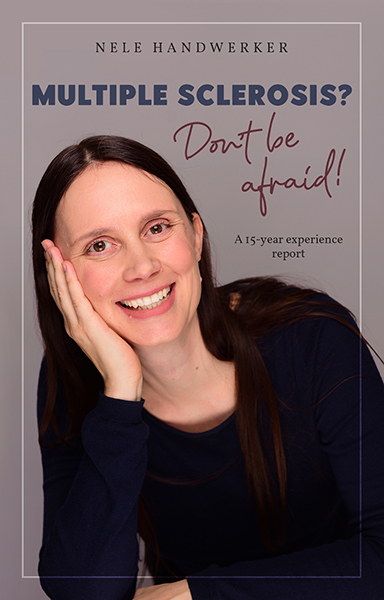
And at many more places.
* This text contains affiliate links. This means that I get a small compensation if you buy the product recommended by me through the link. For you nothing changes in the price of the product. And it helps me to pay for the blog and to write new posts.